

Is geoengineering going to save us all?
Are we even ready to talk about it?

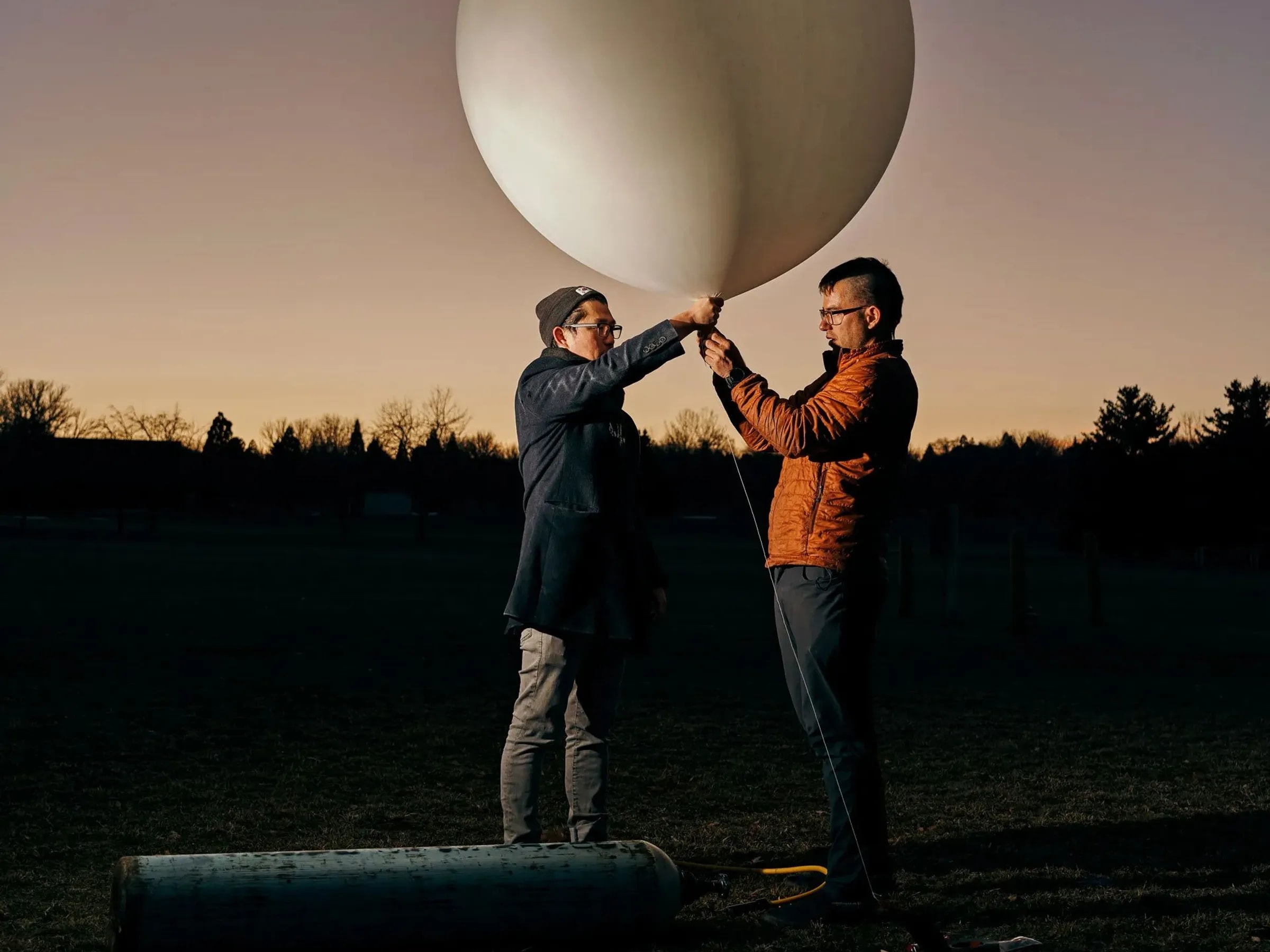
It’s another record-breaking summer. And summer just started.
Global average temperatures have already risen nearly 2.5° F above pre-industrial levels, and the 10 warmest years in recorded history have all occurred in the past decade. Across the United States, states are being hit with extreme temperatures, severe thunderstorms and flash flooding. In Europe, cities have been facing dangerous heat waves since early spring.
ACs are on full blast and cities are even rethinking their infrastructure. Some companies believe we need to think bigger: doing something about the sun itself.
That’s the premise of one of the most controversial topics in climate tech: solar geoengineering.
What is geoengineering?
Geoengineering is the deliberate, large-scale intervention in the Earth’s climate system to counteract global warming. Some approaches focus on removing carbon dioxide from the atmosphere. Others fall under the category of solar geoengineering, which aims to reflect a small fraction of incoming sunlight back into space and temporarily cool the planet.
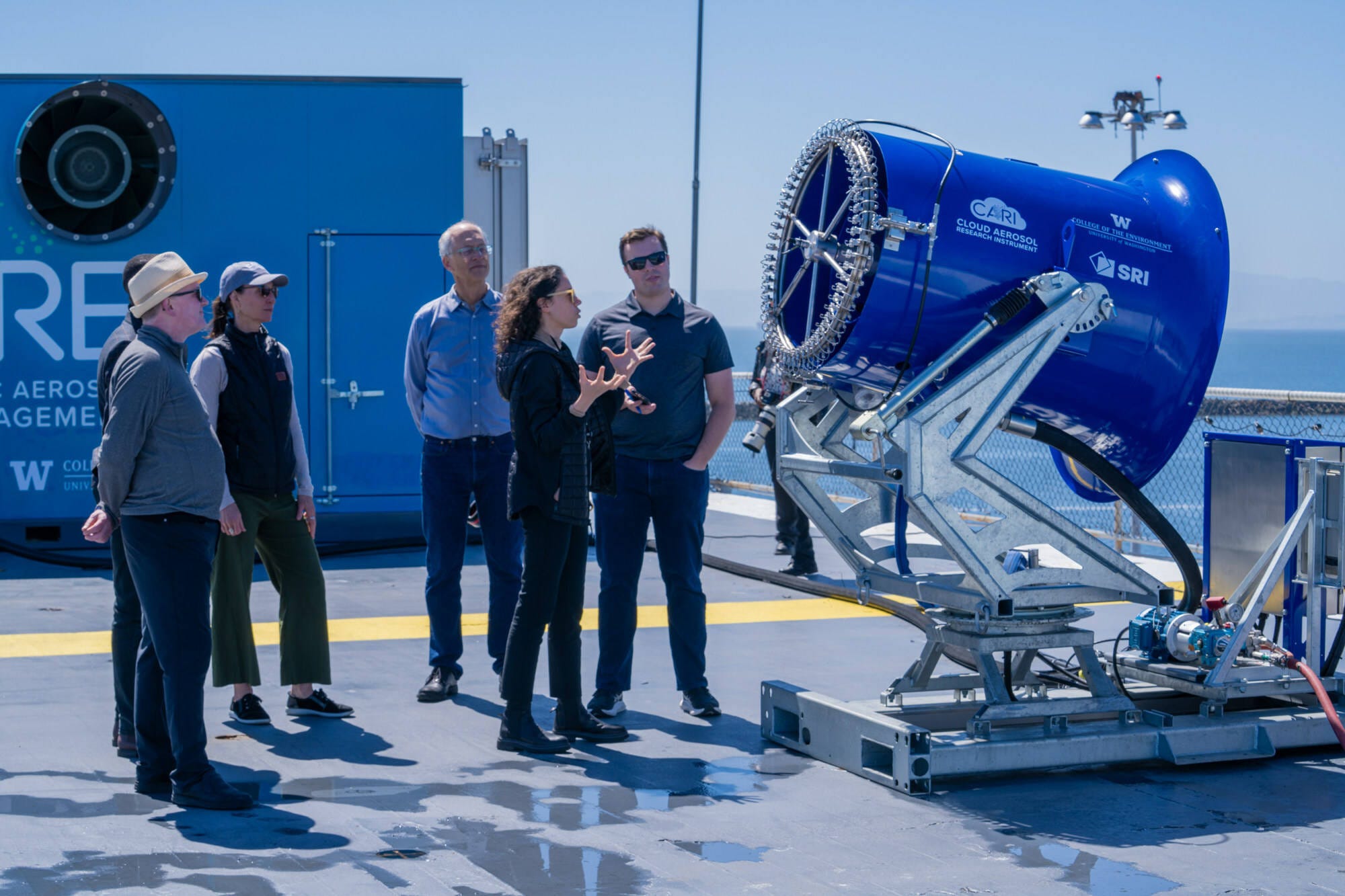
At first glance, it sounds like science fiction: injecting reflective particles into the atmosphere, brightening clouds over the ocean, or preserving Arctic ice by making it thicker and more reflective.
And if you caught the new movie Project Hail Mary, it might sound a little familiar. Ryan Gosling’s character embarks on an interstellar mission to save Earth from a deadly microbe eating the sun to buy humanity more time before a catastrophic ice age hits.

Geoengineering (espeically solar geoengineering) is getting mainstream, increasingly moving from academic papers into real, funded startups.
But are we ready to talk about it?
Well, the answer depends on who you ask. Opposition runs deep, and environmentalists, climate scientists, and policymakers all have something to say.
Critics argue that deliberate climate manipulation could create unintended ecological consequences, threaten human rights, and distract from the urgent work of reducing greenhouse gas emissions.

Supporters counter that the climate crisis is accelerating faster than mitigation efforts alone can address. They argue that if warming continues, then humanity may need every single available tool to reduce risk.
Stardust Solutions, a company planning to build a solar-reflecting system in the next few years, has quickly made headlines and raised $60 million last year. CIEL, however, called it a reckless experiment, a claim that shouldn’t be ignored from one of the most important forces upholding international environmental law. That sentiment is reflected across the wider industry.
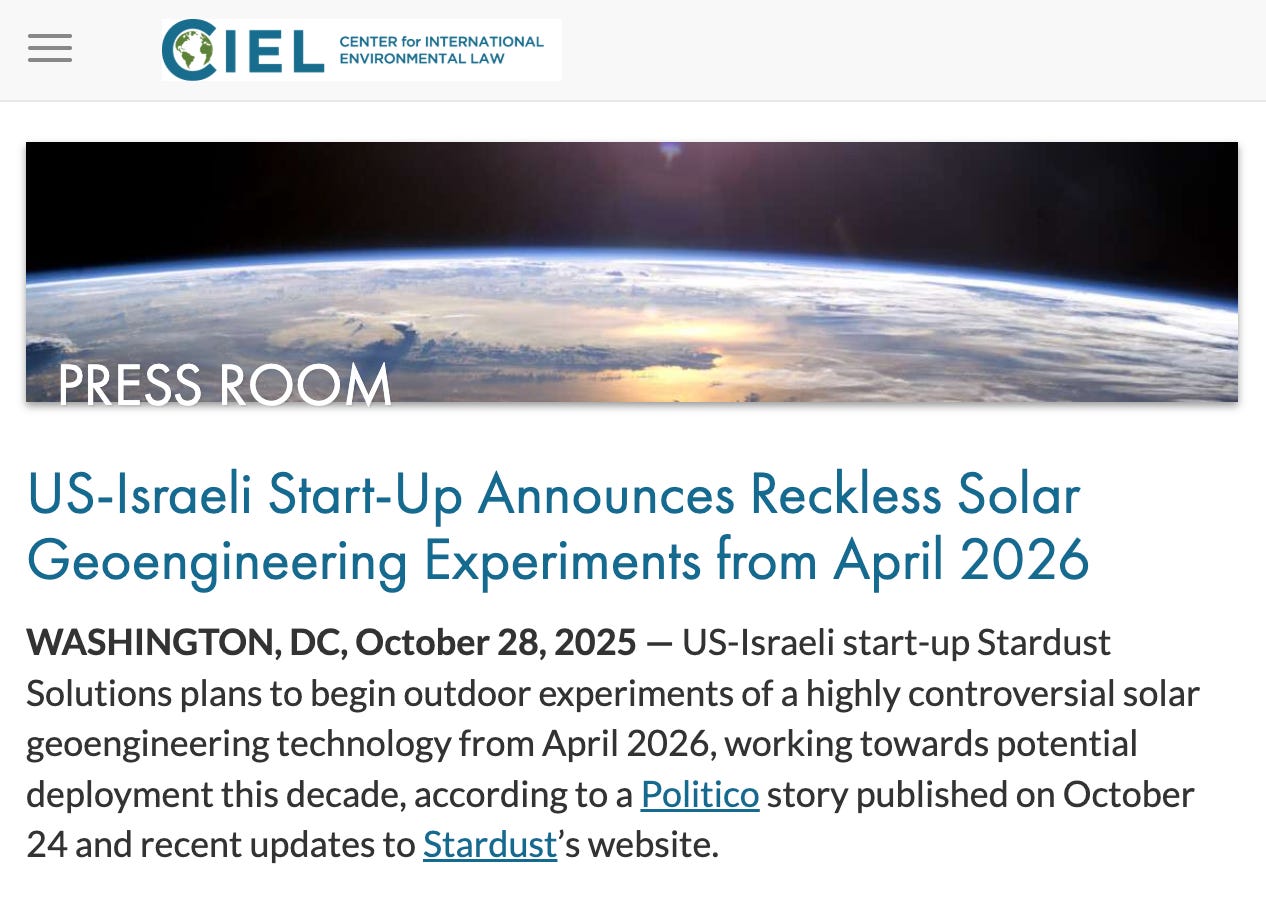
Regardless of where people stand, one thing is becoming clear: geoengineering is no longer fringe.
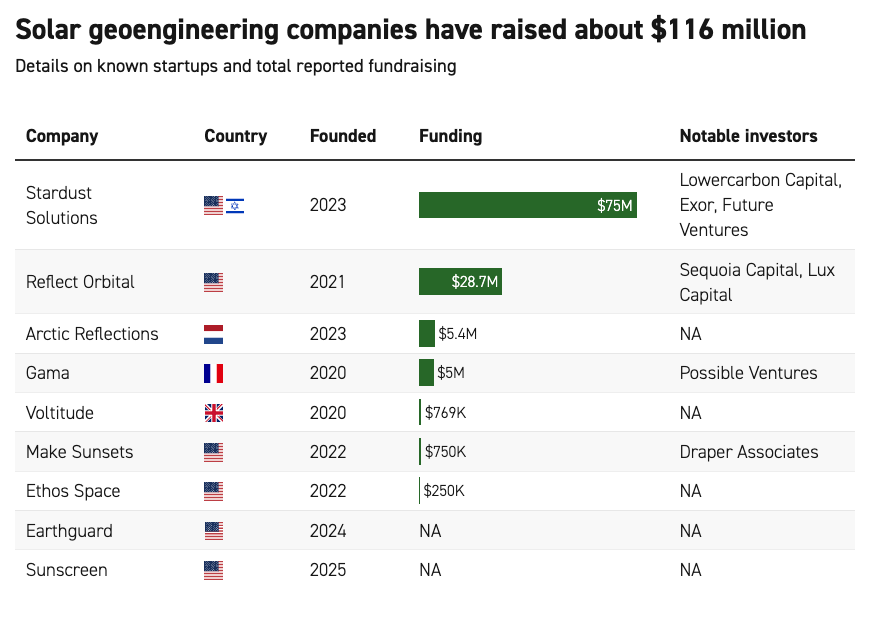
Companies in the solar geoengineering space are quickly bagging capital, researchers are expanding field studies, and policymakers are beginning to grapple with oversight and regulation. This is a critical window for companies to get their message just right.
Education is key
The average person immediately has questions: Is this legal? Is this safe? Who gets to decide? Can it even work?
Communicators cannot assume audiences will arrive with baseline knowledge. Companies entering the space need to spend far more time explaining than promoting, and more time educating than persuading.
Unlike many emerging climate & energy technologies, geoengineering asks the public to consider something fundamentally different: not just another new tool or way of thinking, but intentionally intervening in the planet’s natural systems. That requires a much higher bar for transparency, explanation, and trust.
Balance urgency with optimism
Many geoengineering companies walk a delicate line. The problem they’re addressing is inherently alarming, but leaning too heavily into climate catastrophe can alienate audiences, while overpromising solutions can damage credibility.
Stardust illustrates this balance well. The company’s messaging starts with the facts. On their website, they begin with the reality of rising temperatures and climate impacts. At the same time, they frame the technology as a potential tool for reducing risk rather than a silver bullet for climate change.
The strongest messaging acknowledges the scale of the challenge while leaving room for optimism about what could be possible ahead.
Science matters most
When audiences are skeptical, communicators should assume that every single claim will be challenged. That’s why scientific credibility is the message.
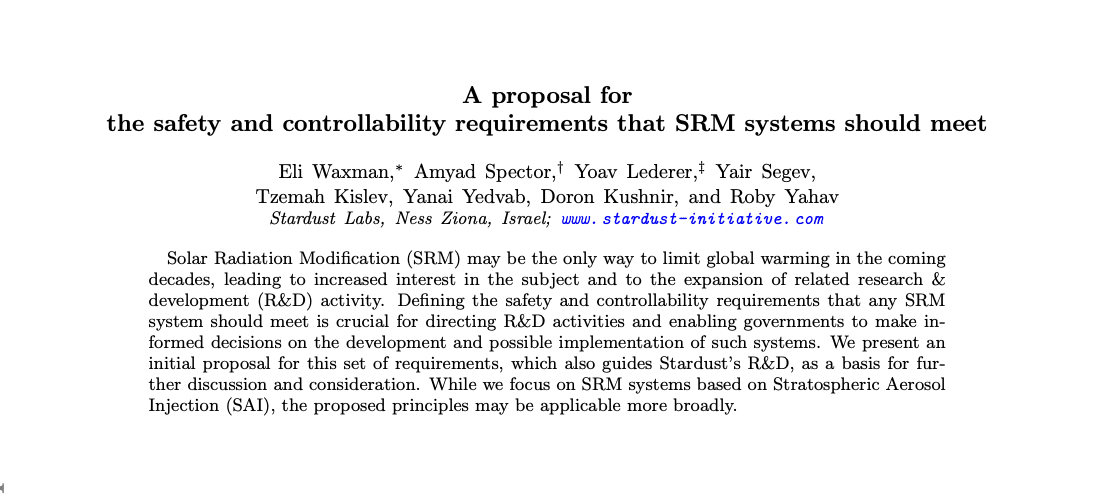
Stardust’s tagline is “Proven by nature, perfected by science” is a good example of that, grounding the conversation in research directly. The company recently published a series of eight scientific papers on their website to prove their system is “safe, controllable, and practical.”
The more visible the science, the stronger the foundation for public trust.
Meeting audiences where they’re at
Early stage climate & energy companies often want to look bigger than they are, and, hey we love doing that as PR professionals. But in a field with so much scrutiny, it is more important to take a step back.
Stardust CEO Yanai Yedvab made this point recently on Latitude’s Catalyst Podcast, comparing geoengineering’s evolution to other fields where academic research eventually translated into real-world applications, from medicine to genome sequencing to space exploration.
“Everything starts with basic research in academia,” he explained. But moving from research into real-world deployment requires bringing together academia and the private sector to build systems, test technologies, and understand how they actually perform outside the lab.
For emerging technologies, that distinction matters. Companies need to be transparent about where they are in the development process, what has been proven, what is being tested, and what remains uncertain.
Companies also cannot let their passion for solving a massive problem overshadow the importance of clear communication. The strongest advocates for geoengineering will not be the ones making the biggest promises; they will be the ones acknowledging uncertainty while explaining why the work matters.
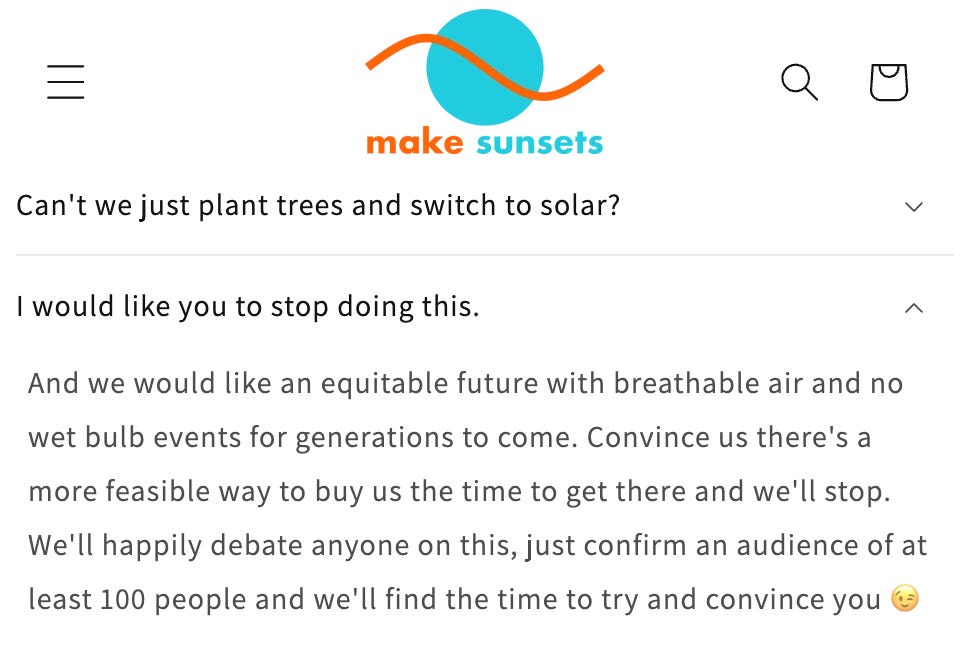
Make Sunsets’ FAQ captures the urgency many companies in this space feel: “Convince us there’s a more feasible way to buy us the time to get there and we’ll stop.” But for a technology as controversial as geoengineering, earning public trust requires more than conviction. It requires meeting skeptics with transparency, evidence, and a willingness to engage.
Just the beginning
The solar geoengineering industry is still in the early innings, and we will see a lot more innovative startups emerge. Regardless of the approach, communicators will continue to face the same challenge: translating complex and sometimes controversial technologies into language that the public can understand, evaluate, and ultimately trust.
When audiences are skeptical, the answer isn’t louder messaging and bolder claims. It’s slower, clearer, and more transparent communication.
Because before the public decides whether geoengineering is the right solution, they first need to truly understand what it is.
Finally… here are some of the stories we’ve been telling:
🔌The grid’s cushion is down to 3%
Reuters digs into a new ICF report finding the U.S. power system has just 26 GW of spare generating capacity left above minimum reliability requirements—with ERCOT and PJM already down to zero. Even as 445 GW of new generation gets built by 2030, ICF’s analysis argues the real bottleneck isn’t supply, it’s how fast that capacity can actually reach the data centers, factories, and homes driving demand up as much as 39% by 2035.
⚛️The billionaire meet-cute that launched a fusion power plant
Latitude Media traces how Inertia came together: after LLNL physicist Annie Kritcher’s team proved fusion ignition in 2022, a chance conversation with Twilio co-founder Jeff Lawson at a party turned into a plan to actually commercialize it. Unlike other companies still chasing new physics, Inertia is starting from validated science and recruiting Apple and Waymo alumni to solve the unsexy part: building a supply chain that can mass-produce laser diodes and fusion targets cheaply enough for a real power plant, dubbed “Thunderdome.”
⚡When your own grid can’t predict its own peak
Amid last week’s record-threatening heat wave, Heatmap’s AM Briefing flagged a striking gap: PJM Interconnection projected demand could hit 166 GW—10 GW above the roughly 156 GW peak it had forecast for the entire summer. ICF’s memo on the miss pointed to a culprit: PJM’s planning leans on a rolling 30-year weather average, a modeling gap that’s only getting more expensive as heat waves become the norm.
🔋California’s local energy players keep out-storaging the utilities
PV Magazine rounds up three storage milestones from the state’s Community Choice Aggregators, who already deliver renewable energy at more than double the rate of the big IOUs. Among them: Lunar Energy’s newest virtual power plant deal with Central Coast Community Energy, which will use its Gridshare platform to coordinate customer-sited home batteries—starting at 5 MW and scaling toward 30 MW by 2030 as more devices join the network.